Design
Designing infrastructure people actually want to look at
30 April 2026 · 2 min read · Hybrid Solar Systems
Energy equipment is normally designed to be hidden. On a waterfront, that instinct is exactly backwards.
There is an unspoken rule in energy engineering: the plant goes behind the fence. Substations, inverters, racking, cable runs, all of it is specified for function and then placed somewhere it will not be seen. It is a reasonable convention for a business park. It fails completely on a waterfront.
The frontage problem
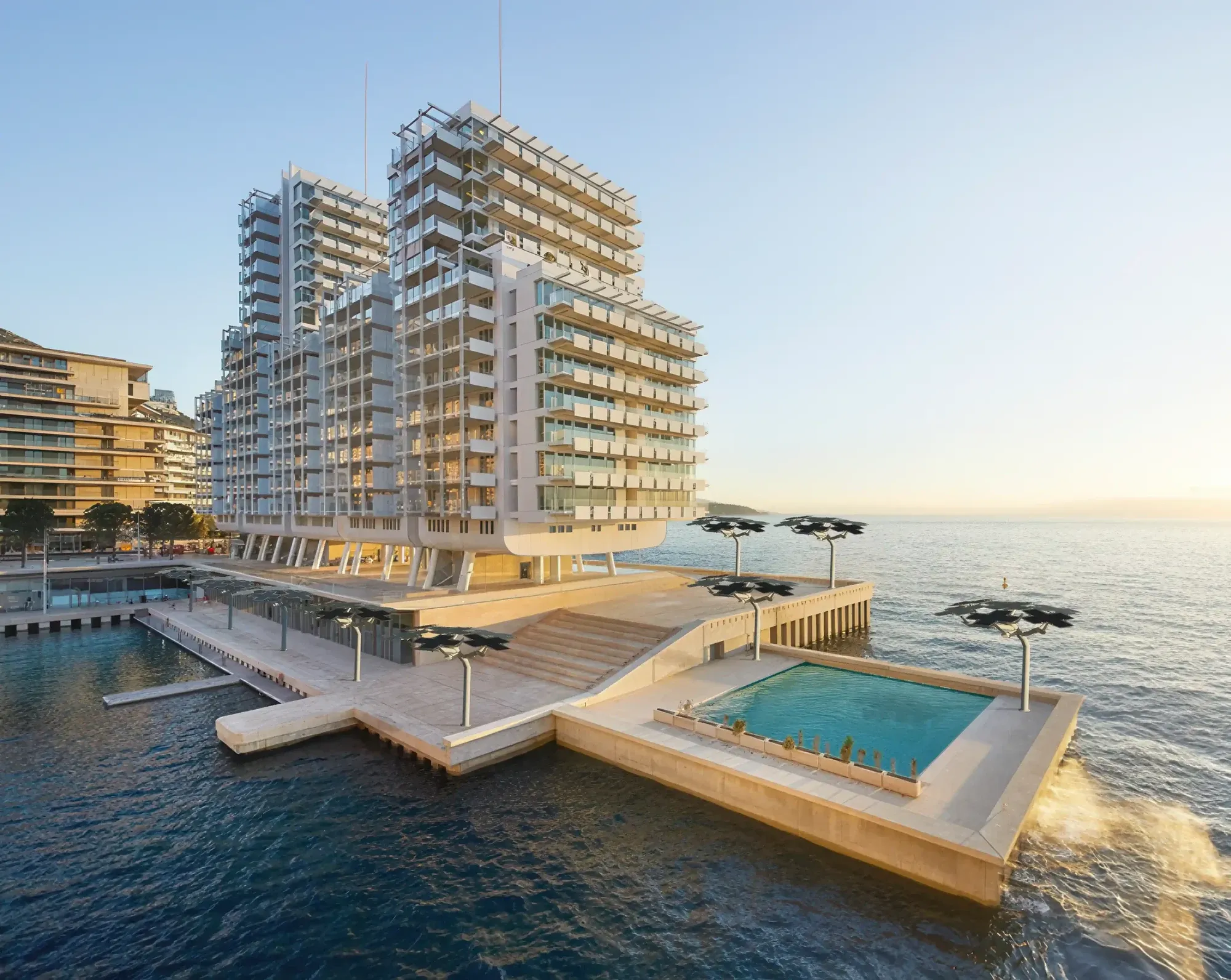
A marina's most valuable real estate is the strip a visitor walks along. Restaurants pay for it. Berth pricing reflects it. Photographs of the harbour are taken from it. Asking an operator to place a dozen pieces of industrial equipment along that strip is asking them to spend their best asset on something they would rather nobody noticed.
The consequence is predictable. Generation gets pushed to marginal locations, sized down, or quietly dropped from the programme.
Changing the constraint
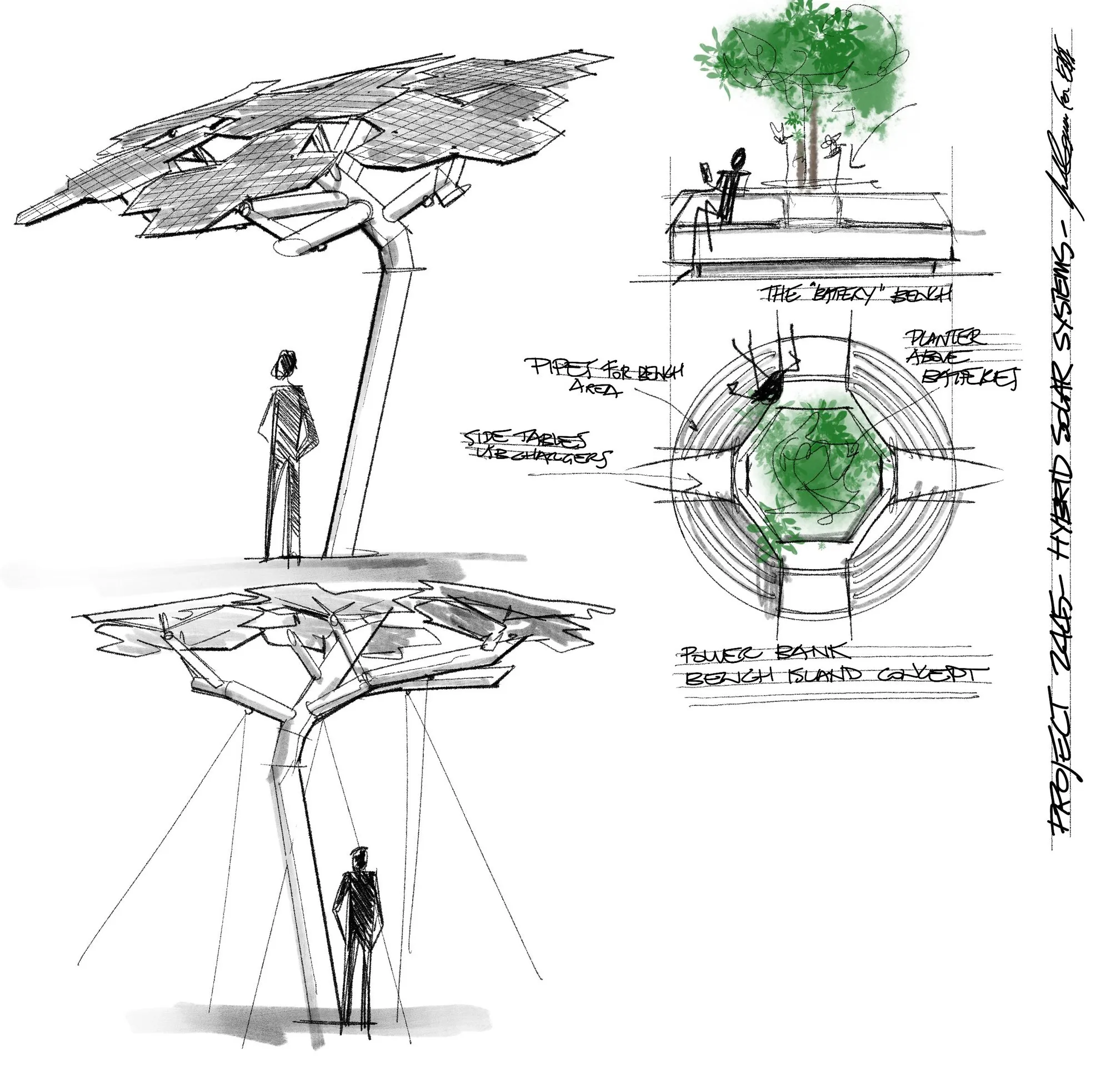
The way out is to make the equipment worth the frontage. That means treating it as architecture from the first sketch, rather than styling it afterwards, which is a genuinely different process. Sightlines, slenderness, the way the form meets the sky and how it reads at fifty metres all become constraints with the same standing as structural load and irradiance.
Working with a studio drawn from the superyacht world imposed that discipline usefully. In yacht design there is no category of component that is allowed to be ugly because it is technical. Everything is resolved.
Borrowing from what is already there
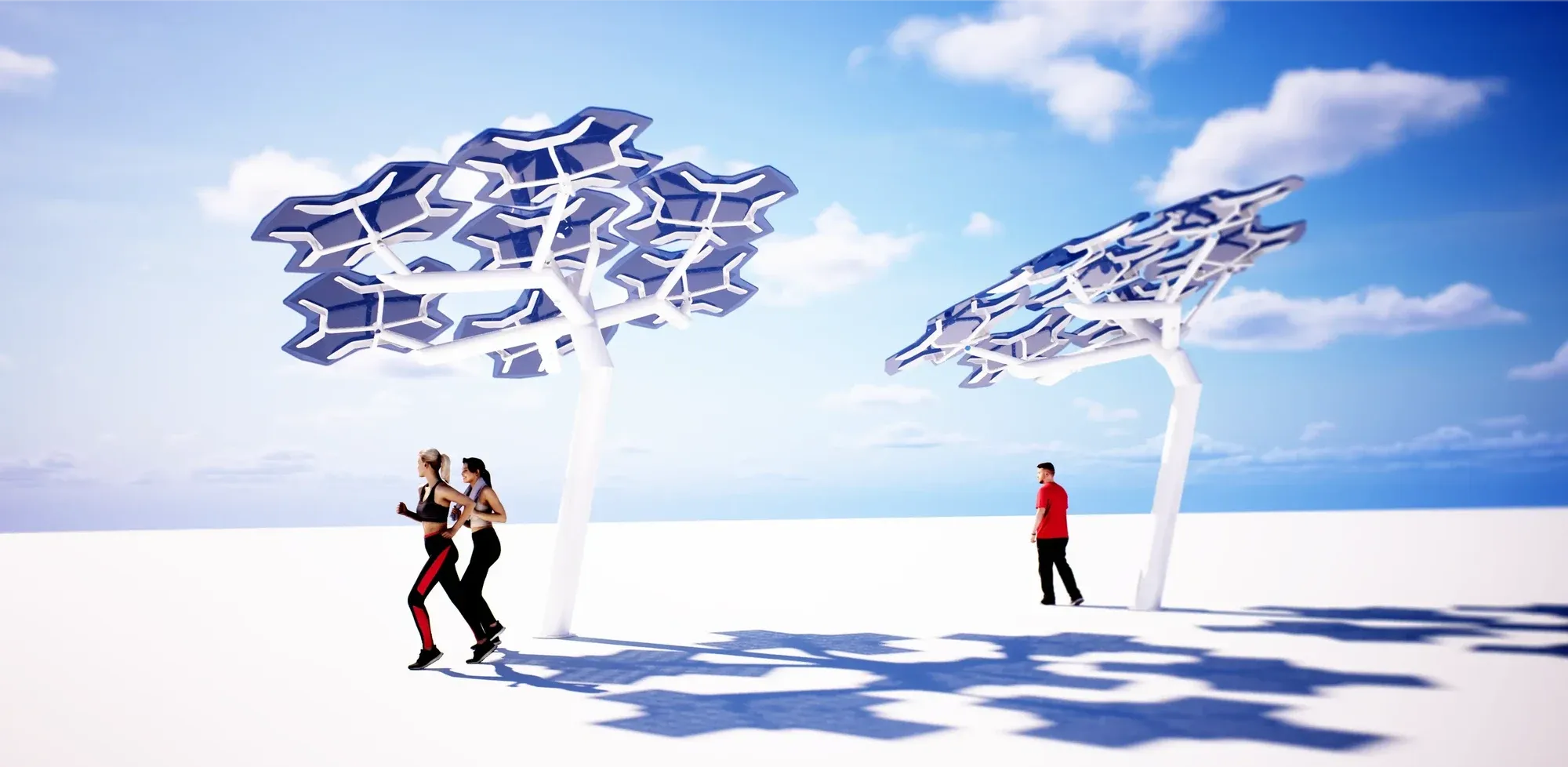
The Mediterranean stone pine gave the project its geometry: a clear trunk, a high level crown, maximum shade from minimum ground contact. That silhouette was not chosen because it looks pleasant, although it does. It was chosen because it is the most efficient shading structure the coastline has produced, and because its crown presents close to an ideal surface to the sun.
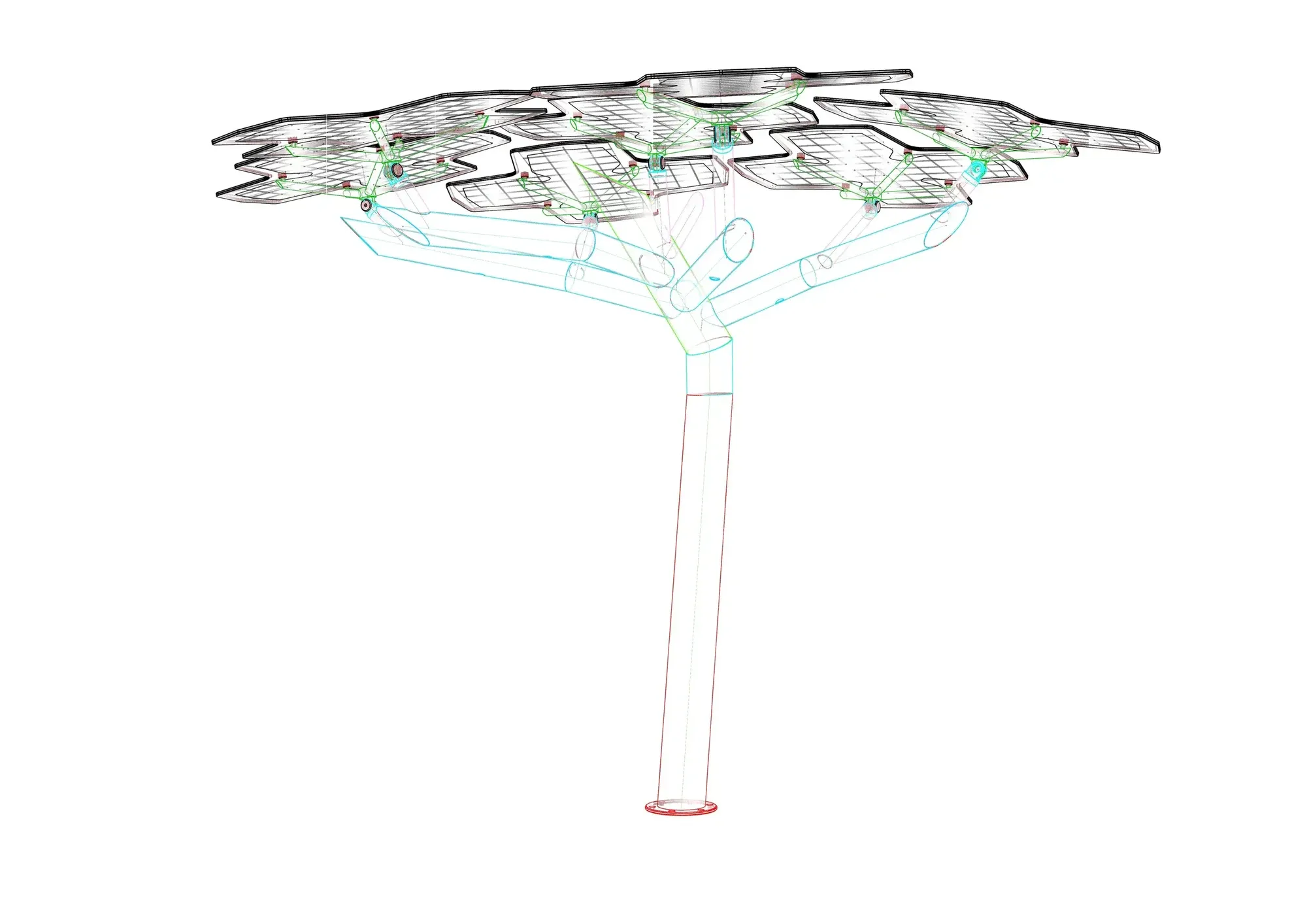
Panels are then cut and arranged to echo leaf and branch. From the promenade the canopy reads as foliage. From the air, it reads as an array. Both readings are true.
Why this is not decoration
The commercial case follows from the design decision, not the other way round. A structure that improves the frontage can be placed on the frontage. A structure placed on the frontage sits where the load is, which shortens cable runs and reduces losses. And an installation that a marina is proud of gets photographed, which turns a piece of infrastructure into marketing.
None of that is available to equipment designed to be hidden.