Technology
Storage is the quiet half of the system
24 March 2026 · 2 min read · Hybrid Solar Systems
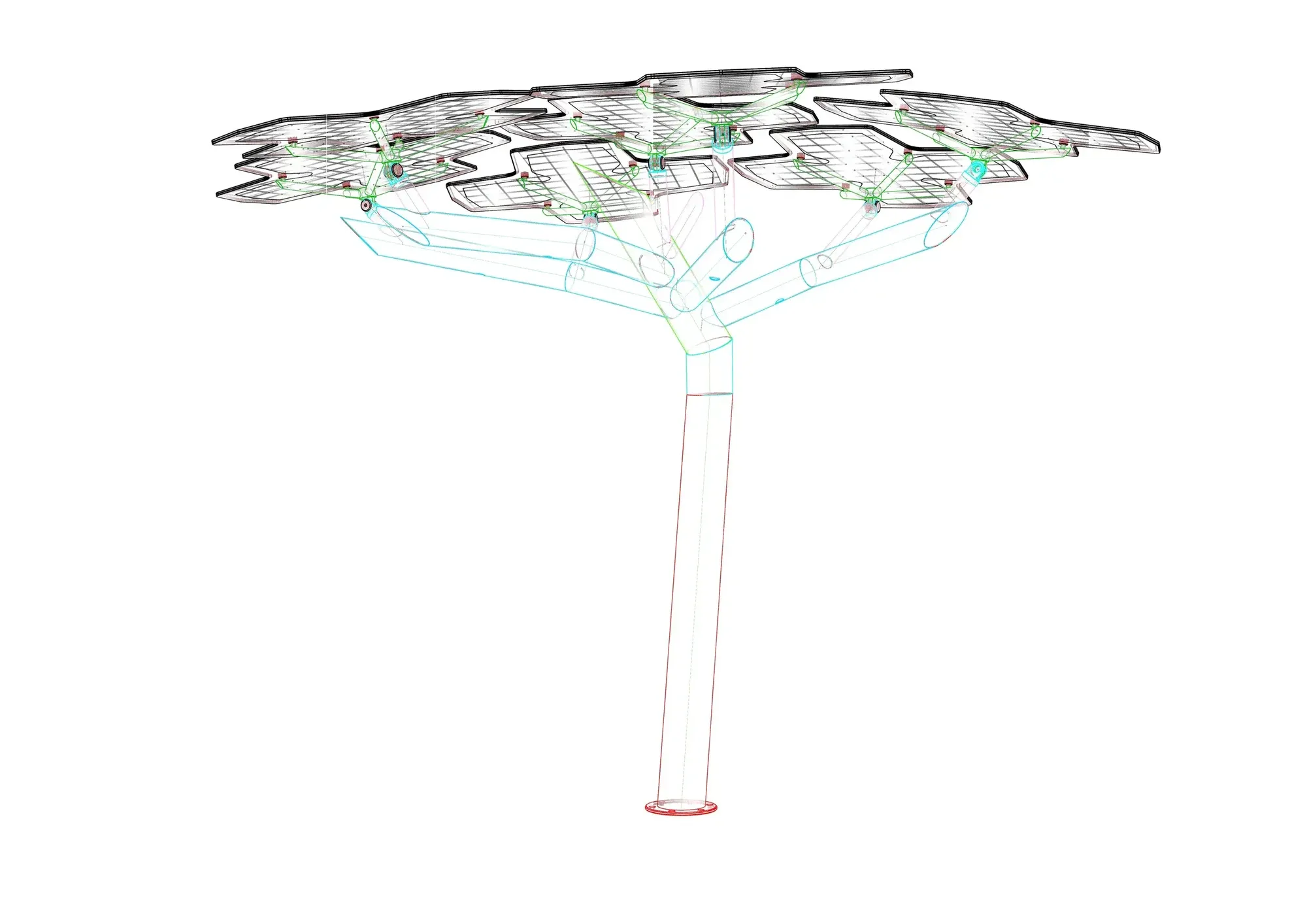
Generation gets the attention. What determines whether a marina stays lit during an outage is the battery in the trunk.
Every conversation about solar starts with the panel and the peak figure. It is the wrong place to focus if the question is what a harbour experiences day to day.
Marina demand is stubbornly out of phase with production. Generation peaks around midday. The loads that matter to an operator, promenade lighting, security systems, service points, overnight charging of tenders, sit almost entirely on the other side of the clock. Without storage, a generating asset serves a load profile the site does not really have.
Sizing against night, not peak
The useful design question is not "how much can this produce?" but "what has to keep running when the sun is down, and for how long?"
Answer that and the specification falls out of it. Lighting and security are predictable, low and continuous. Charging is schedulable. Together they form a night-time profile that storage can be sized against precisely, rather than approximately.
This is also why nameplate capacity is a poor proxy for value. Two installations with identical peak ratings behave very differently if one can carry the night and the other cannot.
Resilience as a line item
Grid interruptions are not exotic events at the coastal edge of a network. When they happen, a marina loses lighting, access control and security simultaneously, at which point the cost is no longer measured in kilowatt hours.
An installation with integrated storage keeps those systems up through an outage without a generator, a fuel store or a start-up delay. Operators tend to value that more highly than the energy savings once they have experienced the alternative.
Making the system legible
The third argument for storage is informational. Once generation, storage and consumption are metered within one connected system, an operator can see energy flow in real time rather than reconstructing it from bills.
That data has a habit of paying for itself. It exposes loads nobody knew were running, it supports certification reporting without extra work, and it turns the annual sustainability conversation from an estimate into a record.
Generation is what people photograph. Storage is what makes the photograph mean something.