Certification
What Blue Flag actually asks for, and why generation is the easy part
27 May 2026 · 2 min read · Hybrid Solar Systems
Environmental certification rewards evidence, not ambition. On-site generation happens to be the most auditable evidence a marina can produce.
Marina operators tend to encounter Blue Flag, Clean Marina and ISO 14001 in the same week, usually because a client, a municipality or an insurer has asked a question. The instinct is to treat them as paperwork exercises. That is a mistake, and an expensive one.
These schemes are about proof
The common thread across all three is documentation of practice. Not a statement of intent, not a strategy deck: records showing what the site does, what it consumes, what it discharges, and how that changes year on year.
Most environmental measures at a harbour are genuinely hard to evidence. Waste segregation depends on behaviour. Fuel handling depends on process. Water quality depends on factors partly outside the operator's control. All of it takes an audit trail assembled from human activity.
On-site generation documents itself
Energy is the exception. A metered generating asset produces a continuous, timestamped record of exactly how many kilowatt hours were created on site and where they went. There is nothing to reconstruct at audit time and nothing that depends on a member of staff filling in a form.
For a twelve-tree installation under Gulf irradiance, that record shows roughly 74.8 MWh a year of on-site generation. It is a single number, independently verifiable, that speaks directly to the criteria all three schemes care about.
The visibility argument
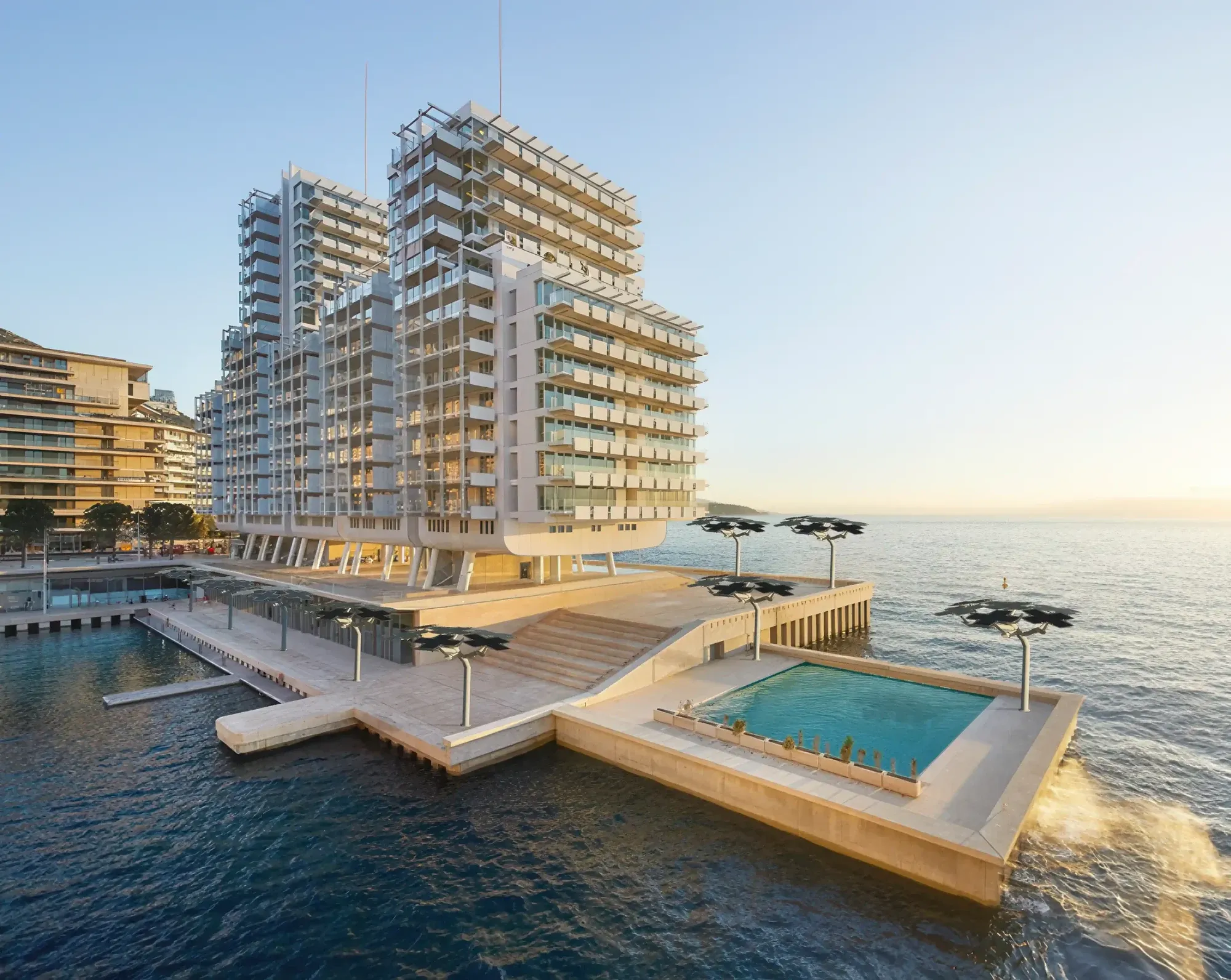
There is a second effect that certification bodies do not measure and clients notice immediately. Most environmental improvement at a marina is invisible, better pump-out procedures do not photograph well. A row of solar canopies along the promenade is the opposite: it is legible from every berth, every restaurant table and every arriving vessel.
That matters commercially. Charter clients and berth-holders increasingly ask what a harbour is doing, and an answer that can be pointed at ends the conversation faster than a policy document.
Where to start
If you are working towards certification, the practical order is usually:
- Establish your current consumption baseline, by circuit if possible.
- Identify loads that run predictably at night, lighting, security, service points.
- Model on-site generation against those loads specifically, rather than against a site total.
- Size storage to the night-time profile, not the peak.
Generation sized against a real load profile is both cheaper and far easier to defend than a headline capacity figure. Certification bodies are unimpressed by nameplate ratings. They are very interested in what actually ran.