Energy
Marinas are not running out of sun. They are running out of deck.
18 June 2026 · 2 min read · Hybrid Solar Systems

The constraint on marina solar has never been irradiance. It is square metres, and that is a geometry problem, not an energy one.
Ask a harbour master why there are no solar panels on the quay and you will rarely hear anything about sunlight. Mediterranean and Gulf marinas sit under some of the best irradiance in the world. The answer is always about space.
A marina is a machine for storing boats, and every horizontal surface is already spoken for. Pontoons carry passage. Hard standing carries craning, storage and winter work. The promenade carries restaurants and rent. There is no spare field waiting for an array, and the surfaces that exist are the ones the business runs on.
Ground-mounted solar asks for the wrong thing
Conventional photovoltaic design assumes cheap land. Rows of panels, generous spacing, service corridors, a fence. Applied to a harbour, that model asks an operator to hand over their most valuable frontage to equipment guests are not supposed to see.
Roof-mounting solves less than it appears to. Marina buildings are low, few and often heritage-constrained, and their combined roof area rarely comes close to matching quayside demand, particularly once electric tenders and shore power enter the load profile.
Building upward changes the arithmetic
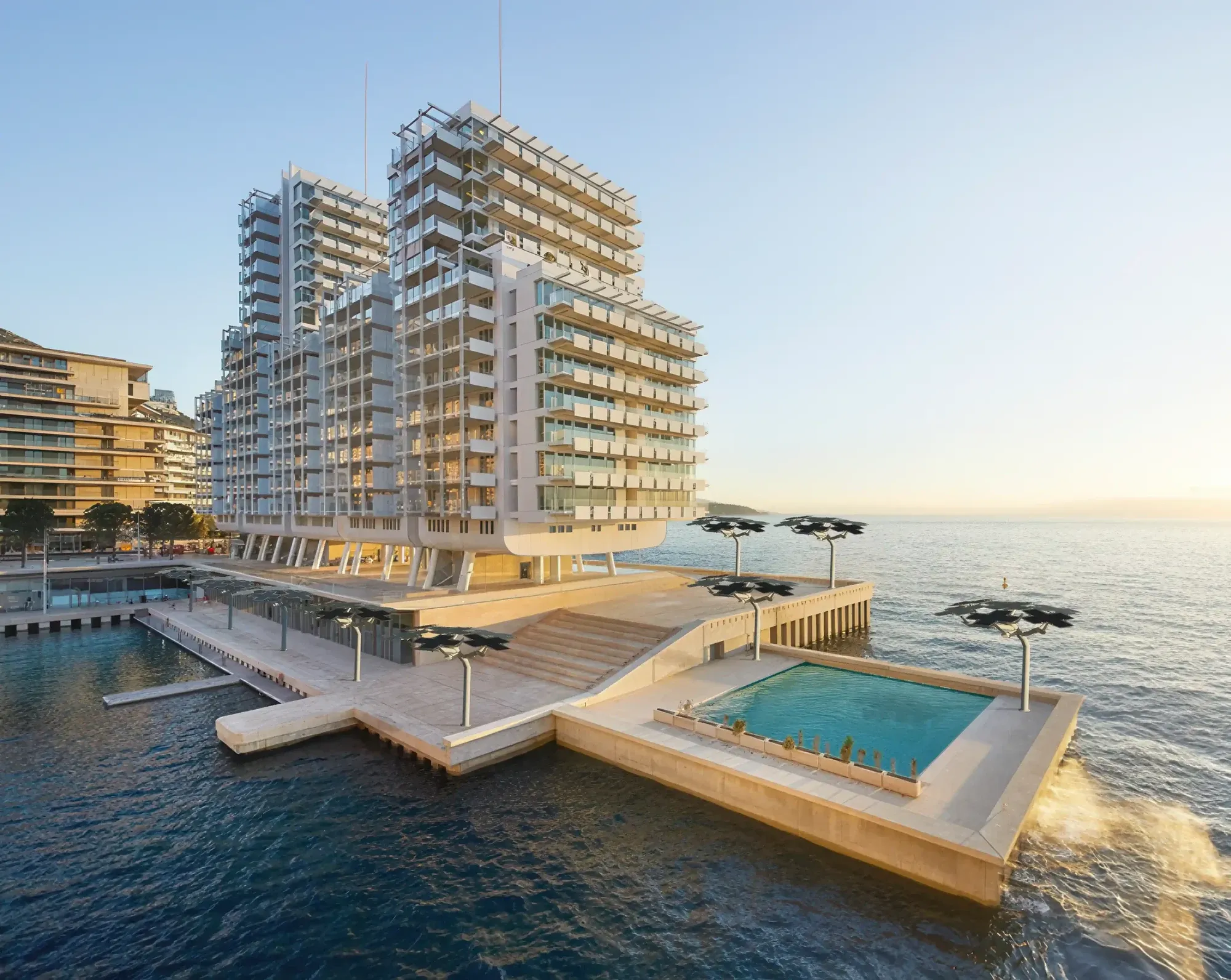
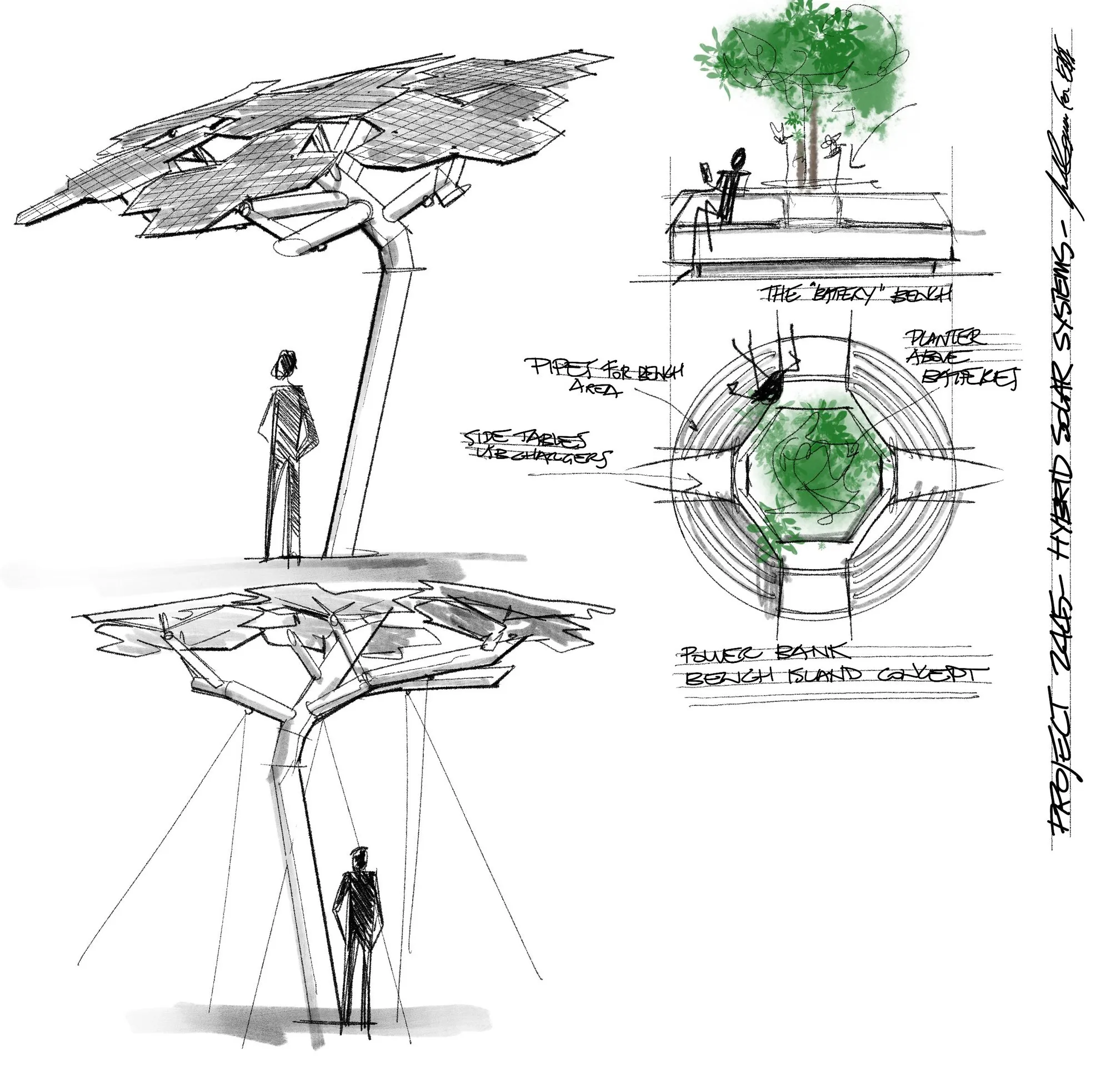
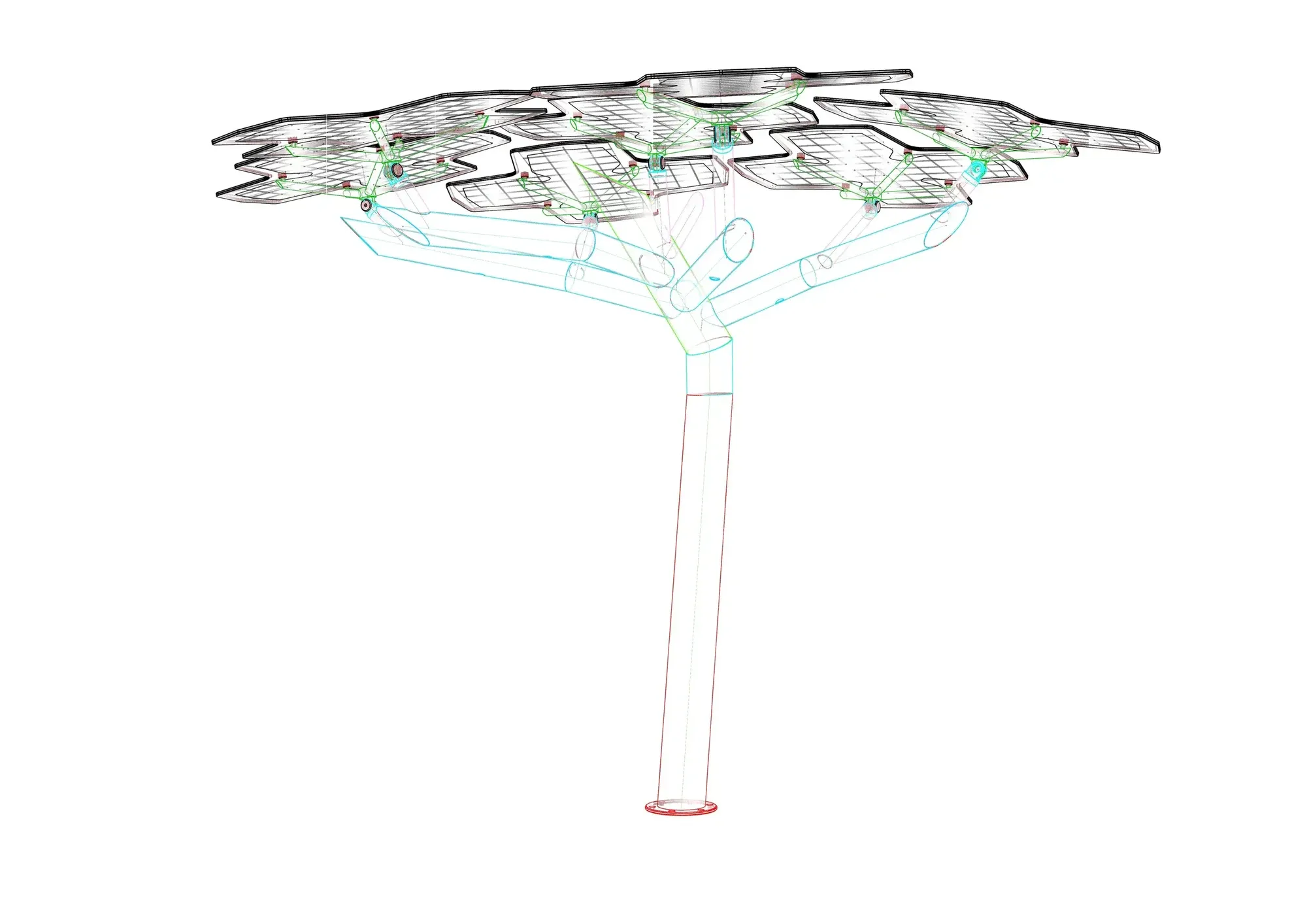
The alternative is to stop competing for ground and start using the volume above it. A single slender trunk occupies roughly the footprint of a bollard. The canopy it carries can be several metres across, angled to collect light through most of the day.
That inversion does three useful things at once:
- The collecting surface grows without the footprint growing with it.
- The space beneath the canopy stays usable, and becomes more usable, because it is now shaded.
- Circulation is unaffected; people and equipment pass underneath as before.
In warm climates the second point is not a side effect. Shade is a scarce, valuable commodity on a summer quayside, and a structure that delivers it while generating power is doing two jobs on one set of foundations.
What this means for planning
Space-efficient generation also changes the permitting conversation. Modular anchoring avoids trenching and marine works, which removes the most contentious element of most harbour infrastructure applications. It also means the installation is reversible: a marina that reorganises its layout in five years is not stuck with a fixed array in the wrong place.
The question worth asking is not "where could we fit panels?" but "what is already standing where we need power, and could it be generating?"